USMNT Winter 2025 Friendlies: What to Expect and Why They Matter

Brandon Mitchell
1 June 2026
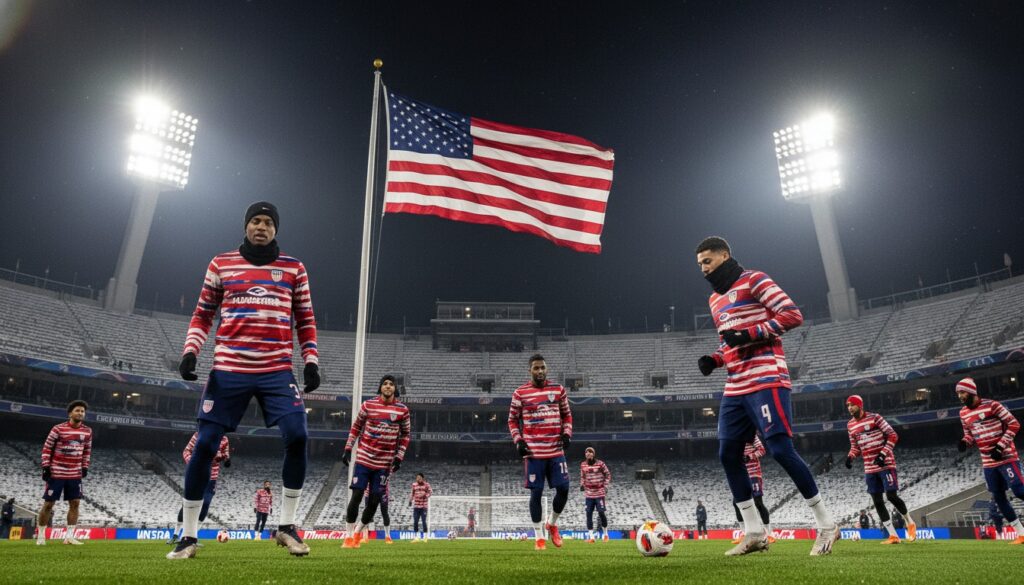
USMNT Winter 2025 Friendlies: What to Expect and Why They Matter
Introduction
The clock is ticking. With the 2026 FIFA World Cup set to kick off on home soil in just over a year, every match the U.S. Men’s National Team plays from here on out is more than just a friendly — it’s an audition, a rehearsal, and a statement of intent all rolled into one. The winter 2025 international window represents a critical juncture for head coach Mauricio Pochettino as he continues to mold a squad capable of making a deep run in front of an expectant American audience.
These aren’t the meaningless friendlies of years past. These are the matches where tactical identities are forged, where fringe players make their cases, and where the foundation for a World Cup campaign is either strengthened or exposed. Let’s break down everything you need to know about the USMNT’s winter 2025 friendly schedule, the storylines to watch, and why these 90-minute windows could define the trajectory of American soccer.
The Winter 2025 Schedule: Opponents and Venues
The U.S. Soccer Federation has strategically lined up a series of friendlies designed to test the USMNT against varying styles of play. While the exact schedule is subject to updates, here’s what we know about the winter window:
- Late January / Early February fixtures are expected to feature a mix of CONCACAF rivals and out-of-confederation opponents.
- Venues are likely to be spread across the United States, giving fans in multiple markets a chance to see the team live — and giving the squad experience in different stadium environments they may encounter during the World Cup.
- Expect at least two to three matches during this window, with opponents ranging from mid-tier European sides to rising South American teams.
- Johnny Cardoso has been turning heads at Real Betis in La Liga and could push for a starting role.
- Aidan Morris offers a different profile — more of a ball-winning destroyer — that could be valuable in certain tactical setups.
- Gianluca Busio brings technical quality and creativity from a deeper position.
- No qualifying pressure means more experimentation. As co-hosts, the USMNT automatically qualifies for the 2026 World Cup. That means every international window is purely about preparation, not results. Pochettino can afford to take risks, try new formations, and blood young players without the fear of dropping points in a qualifying table.
- Team chemistry takes time. Most USMNT players are scattered across European leagues. They get precious few weeks together each year. Every training camp and friendly is an opportunity to build the understanding and cohesion that separates good teams from great ones.
- Managing the hype cycle. Playing on home soil in front of passionate crowds is a double-edged sword. The winter friendlies help the team acclimate to the pressure of performing in front of an American audience that will only grow louder and more demanding as the World Cup approaches.
- Injury assessment and fitness monitoring. The winter window falls in the middle of the European club season. Pochettino and his medical staff will use these matches to evaluate the physical condition of key players and make contingency plans for potential injuries.
- How quickly does the team transition from defense to attack? Speed of transition is a hallmark of elite teams. Count the seconds between winning the ball and creating a chance.
- Who is the vocal leader on the pitch? Watch for the player organizing the defensive line, directing traffic in midfield, or demanding the ball in tight spaces. Leadership will be paramount at the World Cup.
- How does the team respond to going behind? If the USMNT concedes first, observe the body language and tactical adjustments. Resilience is non-negotiable in tournament football.
- Substitution patterns. Pochettino’s substitutions will reveal his thinking about squad depth and role flexibility. If a player consistently comes on in the same position, it’s a strong signal about his planned World Cup role.
- The crowd connection. The USMNT needs to harness home-crowd energy, not be overwhelmed by it. These friendlies are a dress rehearsal for that dynamic.
Why opponent selection matters: Pochettino and his staff aren’t picking opponents at random. Each match is chosen to simulate a specific World Cup scenario — whether it’s breaking down a deep-sitting defensive block, handling a high-pressing European side, or managing the physicality of a South American team.
These friendlies also serve a logistical purpose. With the World Cup being hosted across 16 venues in the U.S., Canada, and Mexico, the team needs to build familiarity with different pitch conditions, altitudes, and travel schedules. Every detail counts when you’re preparing for the biggest tournament in the sport.
Players Fighting for Roster Spots
Perhaps the most compelling storyline heading into the winter friendlies is the roster battle. Pochettino has a deep but imperfect player pool, and these matches will go a long way toward determining who makes the final World Cup squad. Here are the key position battles to monitor:
Goalkeeper
Matt Turner has been a reliable presence, but the emergence of younger options means nothing is guaranteed. Look for Pochettino to rotate between the sticks to evaluate composure, distribution, and command of the box under pressure.
Center-Back Depth
With Chris Richards and Tim Ream representing different profiles — one young and athletic, the other experienced and savvy — the coaching staff needs to identify the ideal partnerships. Winter friendlies are the perfect laboratory for experimenting with pairings.
The Midfield Engine
This is where the real intrigue lies. The USMNT’s midfield has been both its greatest strength and its most inconsistent unit. Tyler Adams, Weston McKennie, and Yunus Musah form the presumed first-choice trio, but fitness concerns and form fluctuations mean players like Johnny Cardoso, Aidan Morris, and Gianluca Busio could seize opportunities.
The Forward Line
Christian Pulisic is the undisputed star, but who plays alongside him? Timothy Weah, Folarin Balogun, Josh Sargent, and Ricardo Pepi are all vying for minutes. The winter friendlies will help Pochettino determine which combinations offer the best balance of pressing, finishing, and link-up play.
“In friendlies like these, it’s not just about who scores — it’s about who fits the system. A player who understands his role off the ball is just as valuable as the one who puts it in the net.” — A sentiment echoed by many national team analysts.
Tactical Themes to Watch Under Pochettino
Since taking over the USMNT, Mauricio Pochettino has been implementing a clear tactical vision that borrows from his successful stints at Tottenham, PSG, and Chelsea. The winter friendlies will be a crucial testing ground for several key tactical themes:
1. High Pressing and Counter-Pressing
Pochettino teams are known for their aggressive pressing. Expect to see the USMNT attempt to win the ball high up the pitch and transition quickly into attack. The winter matches will reveal how well the squad has internalized these principles, especially when facing opponents who are comfortable playing out from the back.
2. Building Out from the Back
Gone are the days of long balls and hopeful punts. Pochettino demands that his teams build possession from the goalkeeper through the defensive line. This requires technically proficient center-backs and a goalkeeper comfortable with the ball at his feet. Watch how the back line handles pressure — it will tell you a lot about the team’s World Cup readiness.
3. Fluid Attacking Movements
One of Pochettino’s hallmarks is positional interchangeability in the final third. Wingers drift inside, fullbacks overlap, and the striker drops deep to create overloads. The winter friendlies will show whether players like Pulisic, Weah, and Balogun can execute these rotations seamlessly.
4. Set-Piece Organization
Often overlooked but critically important at World Cups, set pieces can be the difference between advancing and going home. Look for evidence of rehearsed routines on corners, free kicks, and throw-ins. Pochettino’s staff will use these friendlies to drill these situations relentlessly.
Why These Friendlies Could Define the World Cup Campaign
Let’s be honest: friendlies don’t always get the respect they deserve. Fans sometimes dismiss them as glorified training sessions. But for a host nation preparing for a World Cup, the calculus is entirely different. Here’s why these winter 2025 matches carry outsized importance:
The bottom line: These friendlies are the last low-stakes opportunities the USMNT will have before the intensity ratchets up in 2026. What happens on the pitch in January and February will echo through the summer.
What Fans Should Look For Beyond the Scoreline
If you’re watching these friendlies from home or lucky enough to be in the stadium, here are some things to pay attention to beyond just the final score:
Conclusion
The USMNT’s winter 2025 friendlies may not carry the drama of a knockout-round match or the tension of a World Cup qualifier, but make no mistake — they are among the most important matches this group of players will contest before the tournament begins. Under Mauricio Pochettino’s guidance, every minute on the pitch is an investment in the tactical and psychological preparation needed to compete at the highest level.
From roster battles at every position to the refinement of a pressing-based tactical identity, these matches will provide the clearest picture yet of what the USMNT will look like when the world arrives on American soil in 2026. The foundation is being laid right now, and the winter friendlies are where the blueprint becomes reality.
Call-to-Action
Don’t miss a moment of the USMNT’s journey to 2026. Follow our blog for match previews, post-game analysis, and roster breakdowns throughout every international window. Drop your predictions for the winter friendlies in the comments below — who do you think will break through and earn a World Cup roster spot? And if you’re heading to a match in person, share your experience with us on social media using #USMNTRoadTo2026. The countdown is on — let’s make it count together. ⚽🇺🇸